
Aluminum has become one of the most widely used materials in modern construction. Its strength, durability, and ability to resist corrosion make it a practical choice for many building applications. Approximately 75% of all aluminum used in construction remains in use today. This long lifespan helps reduce environmental impact and supports sustainability efforts across the industry.
As construction continues to shift toward more energy-efficient and low-maintenance designs, aluminum is proving to be more than a strong, lightweight material—it is a long-term solution for both performance and environmental goals.
Key Benefits of Aluminum in Construction
Aluminum’s popularity in the construction world is due to a range of benefits that distinguish it from traditional building materials:
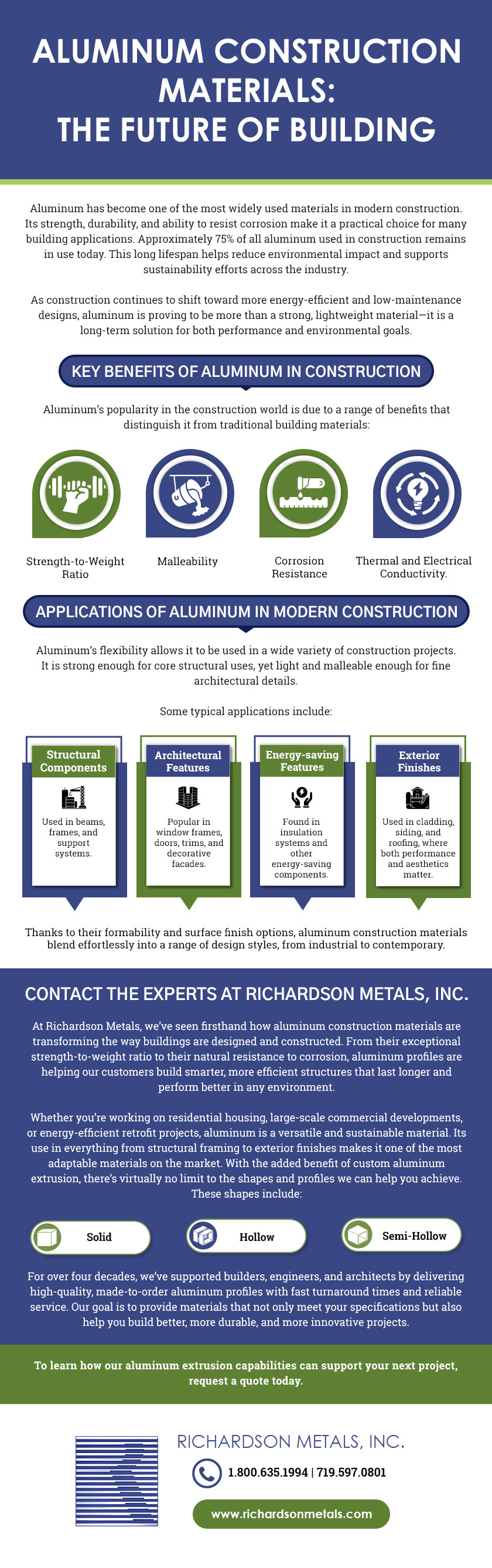
- Strength-to-weight ratio. Aluminum is approximately one-third the weight of steel, yet it still offers a substantial load-bearing capacity. This makes it ideal for buildings where both strength and low weight are necessary, such as multi-level structures or those with complex frameworks.
- Malleability. The metal is highly formable. When heated and pushed through a die, aluminum can take on nearly any shape. This process, known as extrusion, enables the metal to be used for both structural and decorative purposes.
- Corrosion resistance. Aluminum naturally develops a thin oxide layer that protects it from rust and decay. This makes it especially useful in outdoor construction, where rain, wind, and other elements can weaken other materials over time.
- Thermal and electrical conductivity. Aluminum is known for its ability to conduct heat and electricity efficiently. This makes it suitable for components like heat exchangers, window frames, and electrical wiring, which benefit from good thermal performance.
These advantages allow aluminum construction materials to deliver long-term value in everything from high-rises to energy-efficient homes.
Applications of Aluminum in Modern Construction
Aluminum’s flexibility allows it to be used in a wide variety of construction projects. It is strong enough for core structural uses, yet light and malleable enough for fine architectural details.
Some typical applications include:
- Structural components. Used in beams, frames, and support systems.
- Architectural features. Popular in window frames, doors, trims, and decorative facades.
- Energy-saving features. Found in insulation systems and other energy-saving components.
- Exterior finishes. Used in cladding, siding, and roofing, where both performance and aesthetics matter.
Thanks to their formability and surface finish options, aluminum construction materials blend effortlessly into a range of design styles, from industrial to contemporary.
Contact the Experts at Richardson Metals, Inc.
At Richardson Metals, we’ve seen firsthand how aluminum construction materials are transforming the way buildings are designed and constructed. From their exceptional strength-to-weight ratio to their natural resistance to corrosion, aluminum profiles are helping our customers build smarter, more efficient structures that last longer and perform better in any environment.
Whether you’re working on residential housing, large-scale commercial developments, or energy-efficient retrofit projects, aluminum is a versatile and sustainable material. Its use in everything from structural framing to exterior finishes makes it one of the most adaptable materials on the market. With the added benefit of custom aluminum extrusion, there’s virtually no limit to the shapes and profiles we can help you achieve. These shapes include:
- Solid
- Hollow
- Semi-hollow
For over four decades, we’ve supported builders, engineers, and architects by delivering high-quality, made-to-order aluminum profiles with fast turnaround times and reliable service. Our goal is to provide materials that not only meet your specifications but also help you build better, more durable, and more innovative projects.
To learn how our aluminum extrusion capabilities can support your next project, request a quote today.