
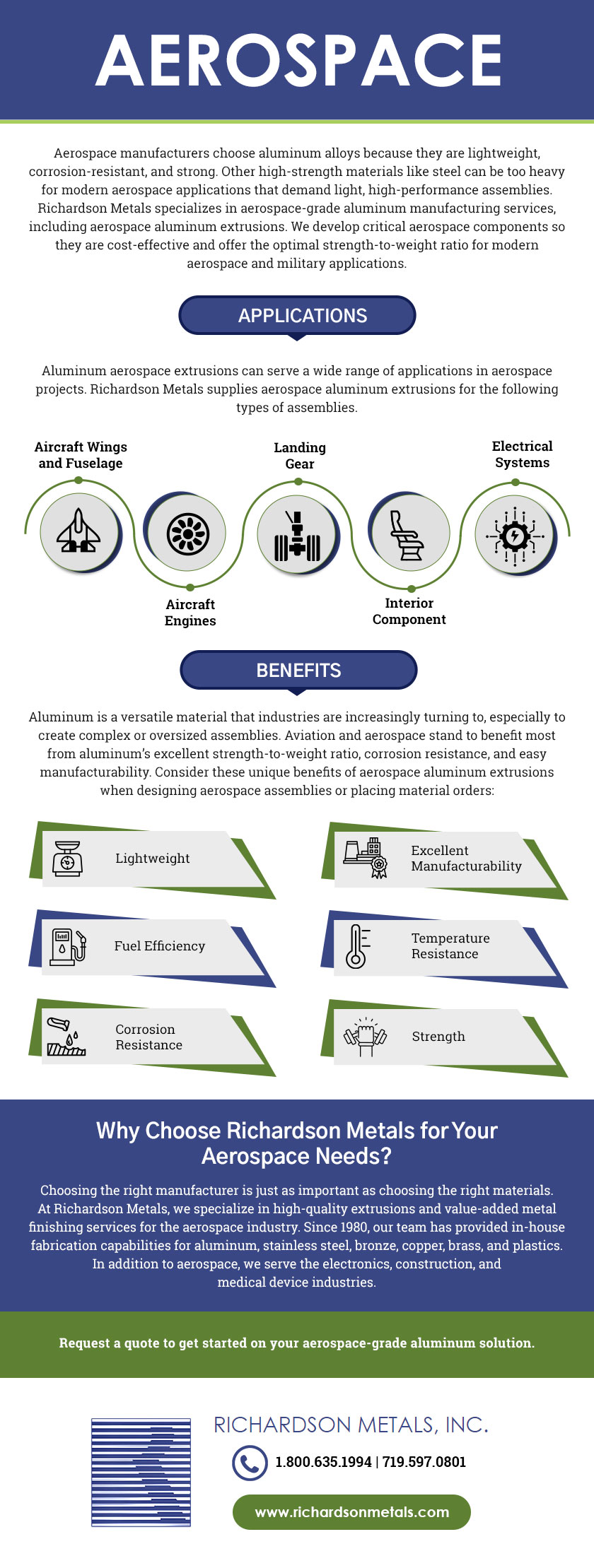
Aerospace manufacturers choose aluminum alloys because they are lightweight, corrosion-resistant, and strong. Other high-strength materials like steel can be too heavy for modern aerospace applications that demand light, high-performance assemblies. Richardson Metals specializes in aerospace-grade aluminum manufacturing services, including aerospace aluminum extrusions. We develop critical aerospace components so they are cost-effective and offer the optimal strength-to-weight ratio for modern aerospace and military applications.
Learn more about the benefits and aerospace applications of aluminum extrusions and how Richardson Metals can support your project with specialty fabrication services.
Applications
Aluminum aerospace extrusions can serve a wide range of applications in aerospace projects. Richardson Metals supplies aerospace aluminum extrusions for the following types of assemblies.
Aircraft Wings and Fuselage
The fuselage, or the body of the aircraft, is a significant structural assembly. By using extruded aluminum panels here, aerospace manufacturers can significantly reduce the weight of the vehicle and simplify construction.
The wings are also essential components of the structure that need to be both light and strong enough to provide fuel-efficient lift. Manufacturers construct wings using aluminum, which is strong enough to withstand stress and light enough to reduce fuel demands.
Aircraft Engines
Lighter engines are also more fuel-efficient and enable more maneuverability and versatility. Manufacturers can use aluminum alloys to create extruded casings and fan blades with excellent physical properties and a high degree of replicability.
Landing Gear
Aluminum landing gear components reduce the total weight onboard an aircraft. Aluminum can also withstand the heavy forces and stress from takeoffs and landing operations. Because aluminum is corrosion-resistant, it’s ideal for long-term use in landing gear, which is regularly subject to harsh environments and the elements.
Interior Components
Interior components also benefit from being corrosion-resistant because that extends the reliable lifespan of each assembly. Aluminum’s light weight, strength, and easy workability make it an excellent choice for interior components like:
- Overhead bins
- Cockpit components
- Seat frames
If these components were made from other materials, such as steel, they could significantly increase the weight of the vessel, making it less reliable and fuel-efficient.
Electrical Systems
Electrical manufacturers can use aerospace-grade aluminum alloys for components such as wiring. Aluminum offers good conductivity characteristics, so it can provide efficient and reliable electrical operations.
Benefits
Aluminum is a versatile material that industries are increasingly turning to, especially to create complex or oversized assemblies. Aviation and aerospace stand to benefit most from aluminum’s excellent strength-to-weight ratio, corrosion resistance, and easy manufacturability. Consider these unique benefits of aerospace aluminum extrusions when designing aerospace assemblies or placing material orders:
- Lightweight. Aluminum weighs one-third of the same amount of steel, so manufacturers can build bigger vessels with the same weight or lighter-weight vessels with the same dimensions.
- Fuel efficiency. Because aluminum is lighter than steel, aluminum aerospace vehicles can go further on less fuel.
- Corrosion resistance. Aluminum alloys naturally resist corrosion from moisture, the elements, and many chemicals, reducing degradation and helping aluminum parts last longer.
- Excellent manufacturability. Manufacturers can use a wide range of manufacturing and machining techniques with aluminum, including extrusion. As a result, product designers can create safer, more innovative designs and push the field of aerospace forward.
- Temperature resistance. Aluminum retains its shape, strength, and positive characteristics across a wide temperature range. Aluminum is also thermally conductive, helping it manage and dissipate heat during all stages of flight.
- Strength. Aluminum is strong enough to handle the force and stress of landing, takeoff, and prolonged flight. It can also carry hefty payloads.
Why Choose Richardson Metals for Your Aerospace Needs?
Choosing the right manufacturer is just as important as choosing the right materials. At Richardson Metals, we specialize in high-quality extrusions and value-added metal finishing services for the aerospace industry. Since 1980, our team has provided in-house fabrication capabilities for aluminum, stainless steel, bronze, copper, brass, and plastics. In addition to aerospace, we serve the electronics, construction, and medical device industries.
Request a quote to get started on your aerospace-grade aluminum solution.