
Aluminum alloys and extrusions are extensively used in the creation of hardware and infrastructure for the telecommunications industry, such as cables and satellite components. Highly valued for their lightweight, high-strength properties, they significantly lower transportation and installation expenses while offering excellent electrical conductivity. Learn more about the key applications and benefits of aluminum telecommunications parts, including Richardson Metals’ innovative aluminum solutions.
Applications
Telecommunications equipment spans both wired and wireless categories. Wired telecom setups include serial communication, professional bus communication, industrial Ethernet communication, and equipment that converts between different communication protocols. Wireless telecom equipment includes wireless access points, wireless network bridges, wireless network cards, lightning arresters, antennae, and more. They are commonly used in telecom base stations, automobiles, and electronics.
Aluminum alloy conductors are often used for communication cables due to their greater affordability compared to copper conductors. Aluminum-iron-magnesium alloys, in particular, are great conductors because they are lightweight and cost-effective, making them a solid, reliable choice in cable manufacturing.
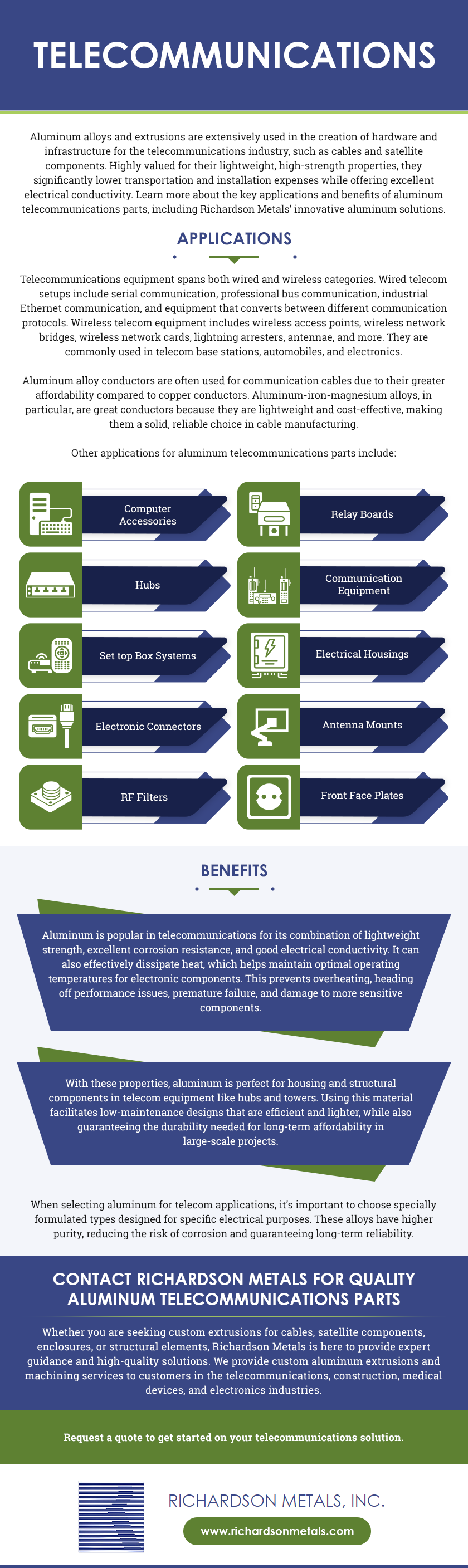
Other applications for aluminum telecommunications parts include:
- Computer accessories. Aluminum components effectively dissipate heat, making them ideal in computer hardware and accessories.
- Relay boards. Lightweight aluminum parts are often used in relay boards because they are capable of withstanding operational heat.
- Hubs. Durable and lightweight aluminum parts are excellent choices for hubs.
- Communication equipment. Parts made from aluminum work well in communication equipment thanks to their strength, stability, corrosion resistance, and heat dissipation capabilities.
- Set top box systems. Aluminum components offer a robust and cost-effective option for set top box systems.
- Electrical housings. Since they provide good shielding and electrical performance, aluminum parts are ideal for electrical housings.
- Electronic connectors. Aluminum’s natural conductivity makes it perfect for use in electronic connectors.
- Antenna mounts. Components made from aluminum are ideal for antenna mounts thanks to their durability, light weight, and conductivity.
- RF filters. Aluminum is widely used in RF filters because of its impressive shielding properties.
- Front face plates. Lightweight and durable aluminum components are well-suited for front face plates.
Benefits
Aluminum is popular in telecommunications for its combination of lightweight strength, excellent corrosion resistance, and good electrical conductivity. It can also effectively dissipate heat, which helps maintain optimal operating temperatures for electronic components. This prevents overheating, heading off performance issues, premature failure, and damage to more sensitive components.
With these properties, aluminum is perfect for housing and structural components in telecom equipment like hubs and towers. Using this material facilitates low-maintenance designs that are efficient and lighter, while also guaranteeing the durability needed for long-term affordability in large-scale projects.
When selecting aluminum for telecom applications, it’s important to choose specially formulated types designed for specific electrical purposes. These alloys have higher purity, reducing the risk of corrosion and guaranteeing long-term reliability.
Contact Richardson Metals for Quality Aluminum Telecommunications Parts
Whether you are seeking custom extrusions for cables, satellite components, enclosures, or structural elements, Richardson Metals is here to provide expert guidance and high-quality solutions. We provide custom aluminum extrusions and machining services to customers in the telecommunications, construction, medical devices, and electronics industries.
Request a quote to get started on your telecommunications solution.