Posted by Richardson Metals on | Comments Off on Aluminum Construction Materials: The Future of Building
Aluminum has become one of the most widely used materials in modern construction. Its strength, durability, and ability to resist corrosion make it a practical choice for many building applications. Approximately 75% of all aluminum used in construction remains in use today. This long lifespan helps reduce environmental impact and supports sustainability efforts across the industry.
As construction continues to shift toward more energy-efficient and low-maintenance designs, aluminum is proving to be more than a strong, lightweight material—it is a long-term solution for both performance and environmental goals.
Key Benefits of Aluminum in Construction
Aluminum’s popularity in the construction world is due to a range of benefits that distinguish it from traditional building materials:
Strength-to-weight ratio. Aluminum is approximately one-third the weight of steel, yet it still offers a substantial load-bearing capacity. This makes it ideal for buildings where both strength and low weight are necessary, such as multi-level structures or those with complex frameworks.
Malleability. The metal is highly formable. When heated and pushed through a die, aluminum can take on nearly any shape. This process, known as extrusion, enables the metal to be used for both structural and decorative purposes.
Corrosion resistance. Aluminum naturally develops a thin oxide layer that protects it from rust and decay. This makes it especially useful in outdoor construction, where rain, wind, and other elements can weaken other materials over time.
Thermal and electrical conductivity. Aluminum is known for its ability to conduct heat and electricity efficiently. This makes it suitable for components like heat exchangers, window frames, and electrical wiring, which benefit from good thermal performance.
These advantages allow aluminum construction materials to deliver long-term value in everything from high-rises to energy-efficient homes.
Applications of Aluminum in Modern Construction
Aluminum’s flexibility allows it to be used in a wide variety of construction projects. It is strong enough for core structural uses, yet light and malleable enough for fine architectural details.
Some typical applications include:
Structural components. Used in beams, frames, and support systems.
Architectural features. Popular in window frames, doors, trims, and decorative facades.
Energy-saving features. Found in insulation systems and other energy-saving components.
Exterior finishes. Used in cladding, siding, and roofing, where both performance and aesthetics matter.
Thanks to their formability and surface finish options, aluminum construction materials blend effortlessly into a range of design styles, from industrial to contemporary.
Contact the Experts at Richardson Metals, Inc.
At Richardson Metals, we’ve seen firsthand how aluminum construction materials are transforming the way buildings are designed and constructed. From their exceptional strength-to-weight ratio to their natural resistance to corrosion, aluminum profiles are helping our customers build smarter, more efficient structures that last longer and perform better in any environment.
Whether you’re working on residential housing, large-scale commercial developments, or energy-efficient retrofit projects, aluminum is a versatile and sustainable material. Its use in everything from structural framing to exterior finishes makes it one of the most adaptable materials on the market. With the added benefit of custom aluminum extrusion, there’s virtually no limit to the shapes and profiles we can help you achieve. These shapes include:
Solid
Hollow
Semi-hollow
For over four decades, we’ve supported builders, engineers, and architects by delivering high-quality, made-to-order aluminum profiles with fast turnaround times and reliable service. Our goal is to provide materials that not only meet your specifications but also help you build better, more durable, and more innovative projects.
To learn how our aluminum extrusion capabilities can support your next project, request a quote today.
Posted by RPM Developers on | Comments Off on Why Choose Aluminum Over Other CNC Metals
Click to Expand
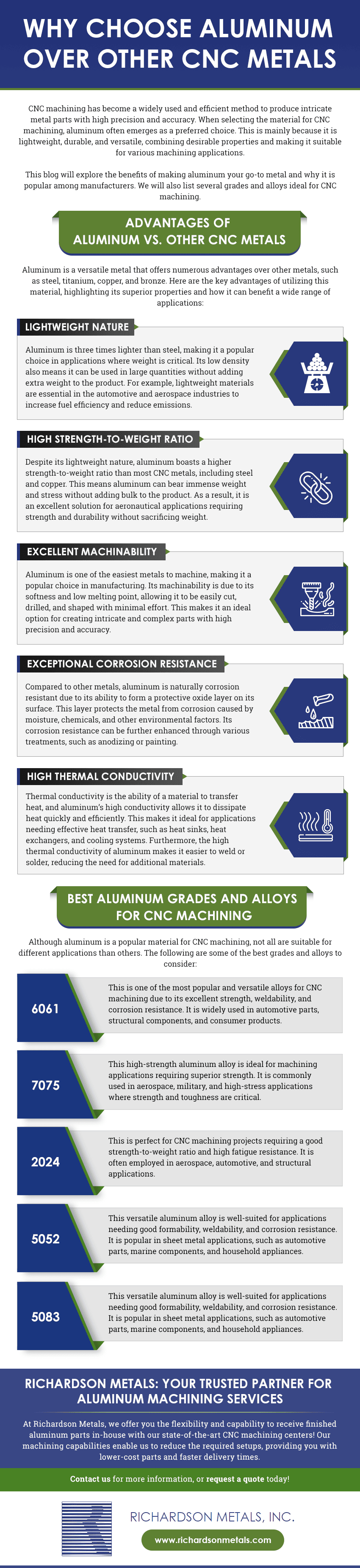
CNC machining has become a widely used and efficient method to produce intricate metal parts with high precision and accuracy. When selecting the material for CNC machining, aluminum often emerges as a preferred choice. This is mainly because it is lightweight, durable, and versatile, combining desirable properties and making it suitable for various machining applications.
This blog will explore the benefits of making aluminum your go-to metal and why it is popular among manufacturers. We will also list several grades and alloys ideal for CNC machining.
Advantages of Aluminum vs. Other CNC Metals
Aluminum is a versatile metal that offers numerous advantages over other metals, such as steel, titanium, copper, and bronze. Here are the key advantages of utilizing this material, highlighting its superior properties and how it can benefit a wide range of applications:
Lightweight Nature
Aluminum is three times lighter than steel, making it a popular choice in applications where weight is critical. Its low density also means it can be used in large quantities without adding extra weight to the product. For example, lightweight materials are essential in the automotive and aerospace industries to increase fuel efficiency and reduce emissions.
High Strength-to-Weight Ratio
Despite its lightweight nature, aluminum boasts a higher strength-to-weight ratio than most CNC metals, including steel and copper. This means aluminum can bear immense weight and stress without adding bulk to the product. As a result, it is an excellent solution for aeronautical applications requiring strength and durability without sacrificing weight.
Excellent Machinability
Aluminum is one of the easiest metals to machine, making it a popular choice in manufacturing. Its machinability is due to its softness and low melting point, allowing it to be easily cut, drilled, and shaped with minimal effort. This makes it an ideal option for creating intricate and complex parts with high precision and accuracy.
Exceptional Corrosion Resistance
Compared to other metals, aluminum is naturally corrosion-resistant due to its ability to form a protective oxide layer on its surface. This layer protects the metal from corrosion caused by moisture, chemicals, and other environmental factors. Its corrosion resistance can be further enhanced through various treatments, such as anodizing or painting.
High Thermal Conductivity
Thermal conductivity is the ability of a material to transfer heat, and aluminum’s high conductivity allows it to dissipate heat quickly and efficiently. This makes it ideal for applications needing effective heat transfer, such as heat sinks, heat exchangers, and cooling systems. Furthermore, the high thermal conductivity of aluminum makes it easier to weld or solder, reducing the need for additional materials.
Best Aluminum Grades and Alloys for CNC Machining
Although aluminum is a popular material for CNC machining, not all are suitable for different applications than others. The following are some of the best grades and alloys to consider:
6061:This is one of the most popular and versatile alloys for CNC machining due to its excellent strength, weldability, and corrosion resistance. It is widely used in automotive parts, structural components, and consumer products.
7075:This high-strength aluminum alloy is ideal for machining applications requiring superior strength. It is commonly used in aerospace, military, and high-stress applications where strength and toughness are critical.
2024: This is perfect for CNC machining projects requiring a good strength-to-weight ratio and high fatigue resistance. It is often employed in aerospace, automotive, and structural applications.
5052:This versatile aluminum alloy is well-suited for applications needing good formability, weldability, and corrosion resistance. It is popular in sheet metal applications, such as automotive parts, marine components, and household appliances.
5083:This marine-grade alloy offers excellent corrosion resistance, high strength, and weldability. It is used in marine applications such as boat hulls and decks due to its ability to withstand saltwater corrosion.
Richardson Metals: Your Trusted Partner for Aluminum Machining Services
At Richardson Metals, we offer you the flexibility and capability to receive finished aluminum parts in-house with our state-of-the-art CNC machining centers! Our machining capabilities enable us to reduce the required setups, providing you with lower-cost parts and faster delivery times.